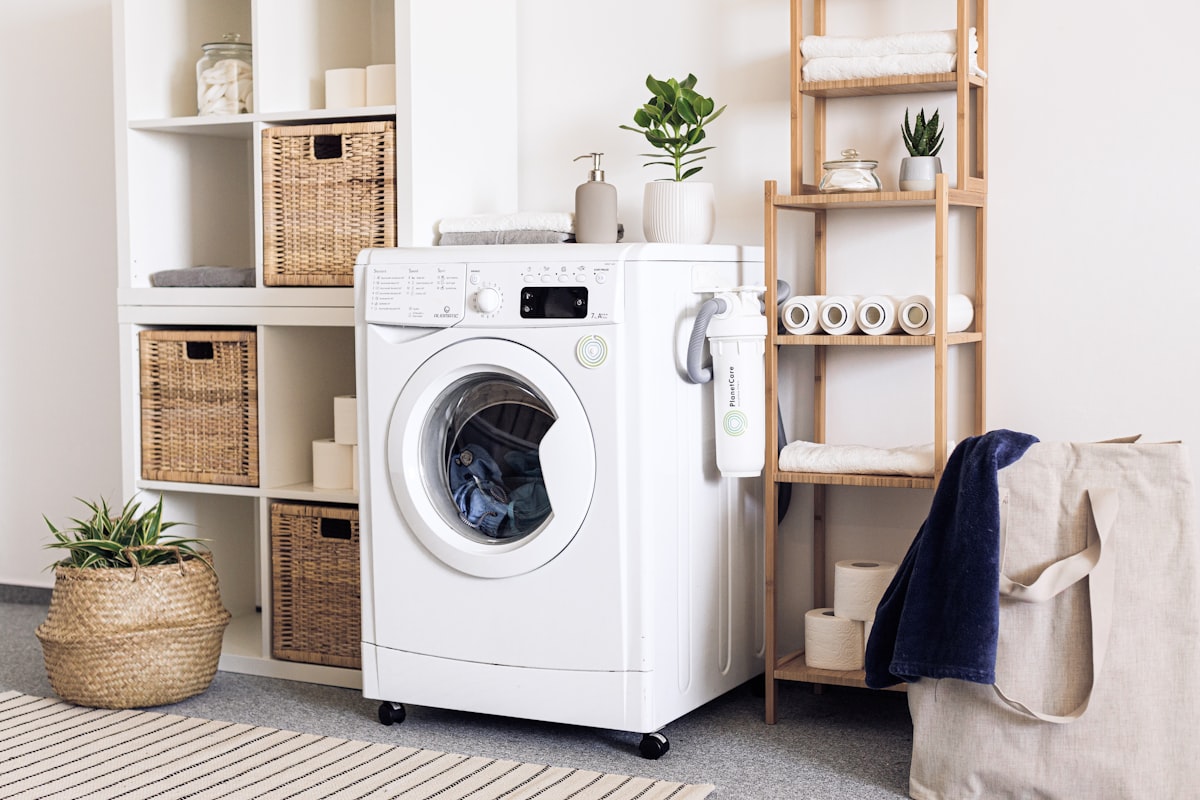
A washing machine full of standing water is one of the most common appliance problems we see across the Bay Area. It is almost always caused by one of five things, and the good news is that some of them you can check and fix yourself in under 30 minutes without any special tools.
This guide walks through every likely cause in order from most common to least, so you can work through them systematically rather than guessing. We also cover error codes, when to call a pro, and how to prevent the problem from returning.
Before you start: Turn the washer off and unplug it. If there is standing water in the drum, drain it manually first using the emergency drain hose tucked behind the access panel at the base of most front-loaders, or bail it out with a bucket. Never work on a plugged-in appliance.
1. Clogged Drain Pump Filter (Most Common Cause)
On almost every modern front-load and high-efficiency top-load washer there is a drain pump filter that catches lint, coins, buttons, and small items before they reach the pump impeller. Over time this filter fills up and blocks water from leaving the machine. Cleaning it is the fix in roughly 60 percent of the drain calls we receive.
How to clean the filter
- Locate the filter access panel on the lower front of the machine and consult your manual for the exact position
- Place towels and a shallow tray under the panel before opening it because water will come out
- Slowly unscrew the filter cap counter-clockwise and let water drain into the tray
- Remove all debris including coins, hair, lint, and small clothing items
- Rinse the filter under warm water and check the housing cavity for additional blockages
- Reinstall securely, then run a spin-only cycle to confirm the drain is clear
Clean the filter every 3 to 4 months as routine maintenance. This single step prevents the majority of drain problems we are called to fix.
2. Kinked or Blocked Drain Hose
The large corrugated hose running from the back of your washer to the standpipe or sink drain can kink if the machine was pushed too close to the wall, or it can become partially blocked by a buildup of detergent residue and fabric softener deposits over years of use.
Pull the machine away from the wall and inspect the entire length of the hose. Look for sharp bends, crush points, or sections where the hose is pinched between the machine and the wall. Also check that the end of the hose sits no more than 96 inches above the floor. Installing it too high means the pump cannot push water up to the drain outlet.
Standpipe height is critical. The drain hose end must sit between 24 and 96 inches off the floor. Too low causes a siphoning effect and the machine drains continuously mid-cycle. Too high and the pump cannot generate enough pressure to discharge water properly.
3. Lid Switch or Door Latch Failure
This one surprises most people. A faulty lid switch on top-loaders or a failed door latch sensor on front-loaders can cause the machine to refuse to spin or drain even though the wash cycle appeared to complete normally. The control board reads an open-door signal and halts the drain-and-spin sequence as a safety precaution.
On top-loaders you can often hear the lid switch click when you press it manually. If it does not click, it has likely failed. On front-loaders, check that the door latch fully engages and that the rubber door gasket has not shifted out of position preventing a proper seal.
4. Failed Drain Pump Motor
If the filter is clear, the hose is unobstructed, and the door switch works, the drain pump motor itself may have failed. This internal component forces water through the drain hose under pressure. When it burns out or seizes, no amount of correct installation will help and the water simply has no way to exit.
Signs of a pump failure include a humming sound at the end of a cycle with no drainage, or complete silence when the machine should be draining. Pump motor replacement is a job for a technician. The motor is located inside the machine, requires partial disassembly, and must be matched to your exact model.
5. Overloading the Machine
Overloading is a contributing factor people rarely consider. A drum packed beyond its rated capacity creates an uneven load, can trigger an imbalance safety halt mid-cycle, and physically restricts water flow to the pump intake. If drainage problems only occur with large loads, split them in half and run a drain-and-spin cycle on a smaller load to test.
Error Codes That Indicate a Drain Problem
Most modern washers display an error code when a drain fault occurs. Here are the most common codes by brand:
- Samsung: 5C, 5E, or nd — start with the filter and hose before anything else
- LG: OE — drain fault, check filter and pump
- Bosch: E:18 — drainage blocked, clean the pump filter
- Miele: F60 or F62 — drain pump fault or blocked filter
- Whirlpool and Maytag: F9 E1 — drain time exceeded, check hose length and pump
Preventing Drain Problems: Simple Maintenance Habits
- Clean the pump filter every 3 months and mark it on your calendar so it does not slip
- Use only HE detergent in HE washers because standard detergent creates excess foam that can block the drain path
- Run a hot maintenance wash on an empty drum once a month to break down soap residue in the drain path
- Check pockets before loading because coins, bobby pins, and small items are the leading cause of pump filter clogs
- Leave the door or lid open after each cycle to prevent mold buildup in the door gasket, which can eventually obstruct drainage
Washer Still Will Not Drain?
If you have checked the filter, hose, and lid switch and the problem persists, the pump motor or control board likely needs professional diagnosis. Same-day service across the Bay Area.
Call (650) 240-2303
Leave a Reply