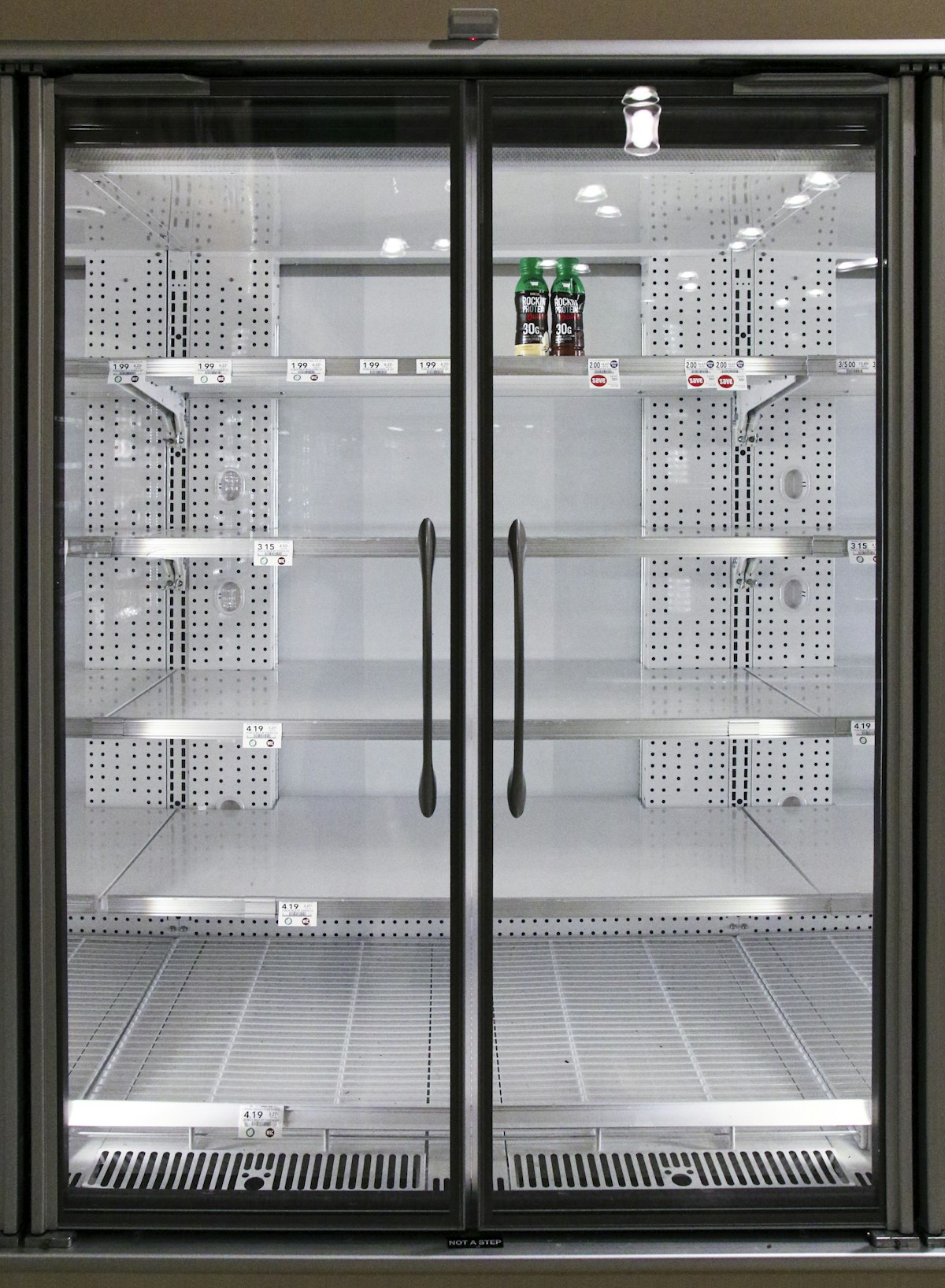
Your refrigerator runs 24 hours a day, 365 days a year and the compressor does most of that work. It pressurizes refrigerant through the cooling loop, pulling heat out and keeping your food safe. When it starts to fail, symptoms are subtle at first, then costly fast if ignored.
This guide covers the five most reliable warning signs of a failing compressor, what drives each symptom, what you can check yourself, and when to call a technician before a small repair turns into a full unit replacement.
Important: Not every cooling problem means a bad compressor. A dirty condenser coil, failed evaporator fan, or cracked door gasket can produce identical symptoms. A proper diagnosis identifies the actual fault before any parts are ordered.
1. The Fridge or Freezer Will Not Hold Temperature
The refrigerator compartment should sit between 35F and 38F and the freezer between 0F and 5F. Milk souring early, ice cream softening, or freezer items developing ice crystals are all signs the cooling cycle is struggling to maintain adequate pressure.
A compressor that cannot build proper pressure delivers less refrigerant to the evaporator coil, so interior temperatures rise even when the thermostat is set low. Whether the root cause is mechanical wear or an electrical fault determines if repair or replacement makes more sense.
How to check it yourself
Place an inexpensive refrigerator thermometer in both compartments and leave it for two hours. If readings are more than 5 degrees above the target range, the cooling system needs professional attention.
2. Excessive Heat at the Back or Sides of the Unit
Some warmth behind the refrigerator is completely normal as the compressor and condenser coils radiate heat as part of the cooling cycle. What is not normal is sustained, intense heat that makes the back panel uncomfortable to touch for more than a second.
Do not block the ventilation gap. Most models need 1 to 2 inches of clearance behind the unit. Pushing the refrigerator flush against the wall traps heat and can cause compressor overheating even on a healthy unit.
3. Unusual Noises: Buzzing, Clicking, or Hard-Start Sounds
A healthy compressor hums quietly for a few minutes at a time, then goes silent. A failing one makes different sounds. A loud click followed by silence means the compressor tried to start, overload protection tripped, and it shut off. This repeats every few minutes and is called a hard start. It often means the start relay has failed, which is an inexpensive fix. Continuous buzzing with no cooling means the motor is energized but not turning. Knocking or clanking indicates internal mechanical damage and you should turn the unit off immediately.
The start relay test
Unplug the fridge. The start relay is a small plug-in component on the side of the compressor. Remove it and shake it. If it rattles, the relay is burned out. A new relay costs $10 to $30 and often resolves a hard-start compressor entirely.
4. The Compressor Runs Constantly Without Cycling Off
A properly functioning compressor cycles on for roughly 4 to 8 minutes, cools the compartment to the setpoint, then shuts off. If yours runs continuously for hours, it has lost efficiency. It may still produce some cooling, but not enough to satisfy the thermostat, so it never gets the signal to stop. This constant running accelerates wear and sharply increases electricity consumption.
Before assuming it is the compressor, check for obvious causes: a door that does not seal properly, a heavily stocked fridge blocking airflow, or a dirty condenser coil. Clean the coils by vacuuming the rear grille and test the door gasket by closing a piece of paper in the door and tugging it. It should offer clear resistance.
5. Unexplained Rise in Your Electricity Bill
A struggling compressor draws significantly more current than a healthy one doing the same job. If your electricity bill has risen by $20 to $40 per month without any obvious explanation, the refrigerator is worth investigating. A full-size refrigerator in good condition uses roughly 100 to 400 watt-hours per day. A compressor running 50 percent more than normal can add $15 to $40 to your monthly bill. You can measure actual draw with a plug-in power meter from any hardware store.
Repair vs. Replace: How to Decide
The general rule in the appliance repair industry is the 50 percent rule: if repair cost exceeds 50 percent of the replacement cost of a comparable unit, replacement often makes more economic sense. Consider the age of the unit. A refrigerator under 8 years old is usually worth repairing. Over 12 to 15 years, weigh repair cost against remaining useful life. Also check whether your specific fault is a $25 start relay or a full compressor swap costing $400 to $900 plus labor. These are very different decisions.
LG linear compressor owners: Check whether your model qualifies for the extended warranty before paying out of pocket. Many LG refrigerators sold between 2014 and 2019 have compressor warranty coverage through 2026 on qualifying models.
How Our Technicians Diagnose Compressor Problems
When we arrive for a compressor diagnostic we verify compartment temperatures with calibrated thermometers, inspect and clean condenser coils, test the start relay and run capacitor with a multimeter, measure compressor amp draw against spec, check refrigerant pressure, and inspect the evaporator fan motor. This systematic approach means we never replace an expensive compressor when a $25 start relay is the actual fault.
Think Your Compressor Is Failing?
Same-day diagnostics across the Bay Area. We tell you exactly what is wrong and what it costs before any work begins.
Call (650) 240-2303
Leave a Reply